
Water inside a home rarely shows up where it started. Leaking from a pinhole in a supply line, it follows the framing and can stain a ceiling in another room. The stain is a clue, not the source.
Most hidden leaks give a few clues before they cause real damage. Knowing what they look like, and where to look first, makes it much easier to catch one early.
Signs of a water leak in your house
- Stains on ceilings or walls. Yellow or brown rings, bubbling paint, or a patch that keeps coming back after you paint over it.
- Warped or lifting floors. Wood that cups, laminate that swells at the seams, or tile that sounds hollow when you tap it.
- A musty smell. Often strongest in a closet, under a sink or behind a bathroom wall, where the air doesn’t move much.
- Soft drywall. Press near the base of a wall or under a window. If it gives, water has been sitting there.
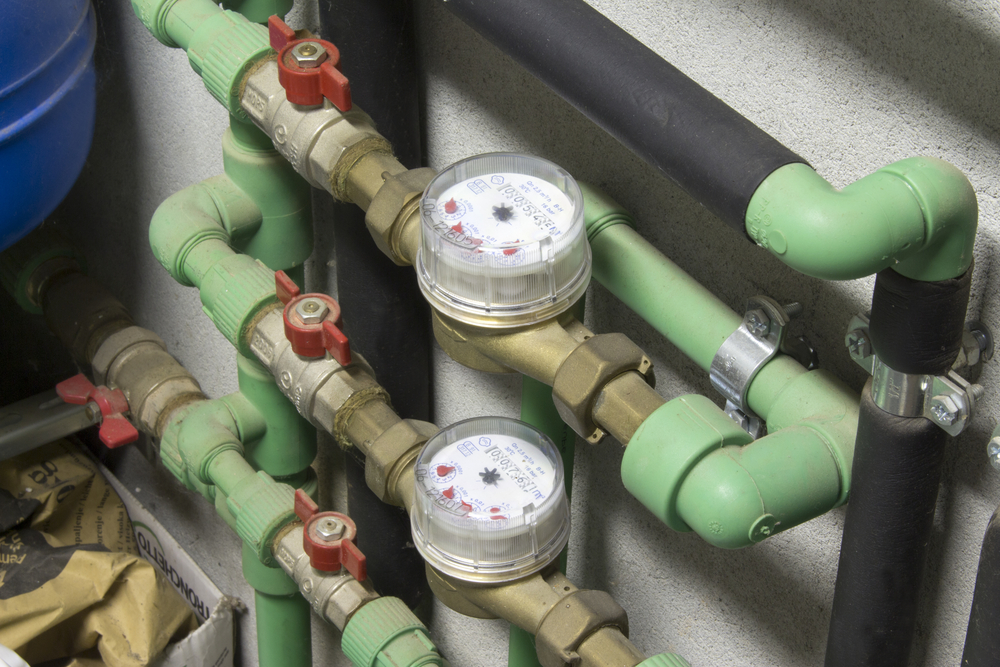
- A meter that moves with everything off. The clearest sign of all, and you can check it yourself.
- Running water you can hear. A hiss or trickle in a wall when no tap, toilet or appliance is running.
Where leaks hide
Supply lines inside walls
Copper and galvanized lines running to kitchens and bathrooms. A leak here shows up as a stain, soft drywall or bubbling paint.
Shower pans and shower valves
A cracked pan or a weeping valve body behind the tile wets the subfloor or the wall on the other side. Grout and caulk get blamed first, but the water sometimes traces back to the valve or pan.
Water heater connections
Flex lines, fittings and the relief valve line. Small drips here can soak a closet floor or garage slab without anyone noticing.
Toilet and sink supplies
Braided supply hoses and angle stops under vanities. These fail quietly and can leak into the cabinet floor.
Under-slab lines and irrigation tie-ins
Many homes are slab-on-grade with water lines under the concrete. And where the sprinkler system connects to the house supply, a leak can look like a house leak on the meter.
Older homes, older pipes
Galvanized pipe rusts from the inside. Over decades the walls get thin and the inside narrows with scale, so you may notice low pressure or brown water before a leak appears. Leaks tend to start at threaded joints.
Original copper holds up better, but water chemistry, including hard water, can contribute to pinhole leaks. They tend to show up on hot lines and where pipe rubs against framing or concrete.
Is it actually a leak?
Sometimes the stain is an old one, or the moisture is condensation from an AC line or a bathroom with no fan. A meter that holds steady with everything off is a good sign the plumbing itself isn’t losing water.
See how residential leak detection works, or tell us what you’re seeing.